

Inishturk Island
A Rugged Atlantic Island of History
and Resilience
Inishturk is a small Atlantic island, approximately five kilometres long and two and a half kilometres wide, located about 15 km off the coast of County Mayo, between Clare Island and Inishbofin. Rising boldly from the North Atlantic, the island is characterised by steep hills, dramatic, wall like cliffs to the north west, sheltered harbours and a landscape shaped by geology, weather and generations of island life. From the northern heights, the ruins of a Napoleonic signal tower stand 688 feet above sea level, overlooking the Atlantic.
Inhabited on and off for over 6,000 years, Inishturk’s history is one of resilience, adaptation and strong community bonds. Archaeological remains around Portdoon Harbour point to early settlement, and evidence suggests continuous occupation in its present phase since at least 1700. The earliest settlers appear to have congregated at the southwest corner of Portdoon Harbour, where there is extensive archaeological evidence of their presence. Later layers of history, from medieval farming practices to Napoleonic coastal defences, remain visible across the island today. Fulacht fiadh have also been located on the island, further attesting to its long human history.
Inishturk Island
Ancient Roots & Heritage
Geologically, Inishturk dates from the Ordovician period. Two distinct folds of schists and shales rise out of the Atlantic to form the island, continuing the same ancient geological structures as Croagh Patrick on the Mayo mainland. The island’s name, Inis Toirc, meaning “Island of the Wild Boar” in Irish, reflects its deep Irish language roots. Irish was the island’s first language until the early twentieth century, when long patterns of migration and emigration, particularly since the famine, led to a predominantly English-speaking community.
Traditionally, islanders emigrated to America and England, creating a strong diaspora with enduring ties to the island. The ancestry of the present population includes Wicklow, Wexford and Galway, as well as the nearby Connemara Gaeltacht. Prominent family names such as O’Toole, Heanue and Concannon reflect influences from Leinster, Ulster and the west of Ireland.
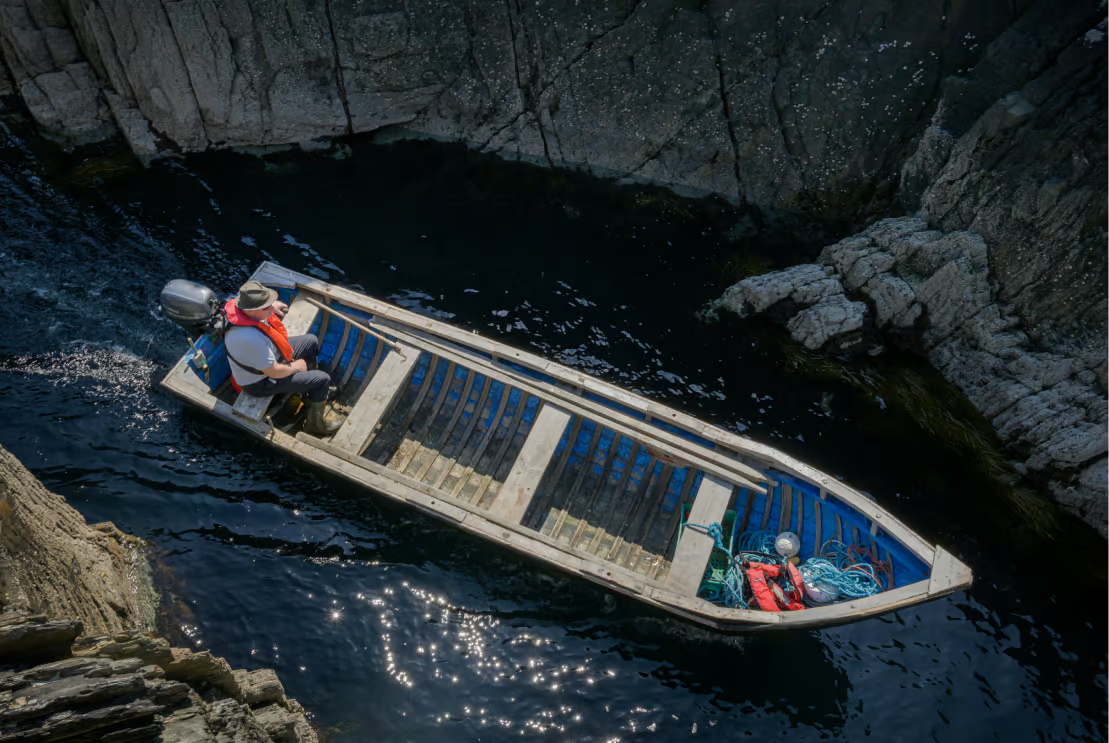
Today, Inishturk is home to a small, close-knit population who continue to live, work and care for the island together. Community ownership, shared resources and collective decision-making remain central to island life. The island has a main harbour with a recently improved pier, fine beaches, rich biodiversity and many significant archaeological sites. Visitors are welcomed not simply as guests, but as people invited to experience a living place, one where land, sea, culture and community are deeply interconnected.
At the heart of Inishturk is a strong commitment to protecting what makes the island special, its people, its landscape, its biodiversity and its sense of belonging. This commitment guides how the island is lived on today and how it is planned for tomorrow.
Legend, Memory & Enduring Spirit
Local tradition and folklore add another layer to Inishturk’s history. According to legend, the Dun at Portdoon was built by pirates who sheltered their galleys in the creek below, hidden from passing ships by surrounding rocks. These pirates were said to be the last Danes in Ireland and were reputed to know how to make bier lochlannach, a mead brewed from heather bloom. The fort was eventually surprised and taken by the Irish, who killed the pirates except for one man and his son. The captives were offered their lives in exchange for revealing either the secret of the mead or the hiding place of the pirates’ accumulated treasure. Fearing that his son might be tortured or tempted into betrayal, the old pirate agreed to speak only if his son was put to death first. Once this was done, the pirate captain tore himself from his captors and ran, shouting insults, to the deep chasm, leaping from the cliff and carrying his secret with him to Odin.
Inishturk’s story is one of continuity as much as change. Shaped by ancient geology, long settlement, shared memory and living tradition, the island remains a place where past and present exist side by side. Its landscape, community and heritage continue to define not only where Inishturk has come from, but how it endures into the future.